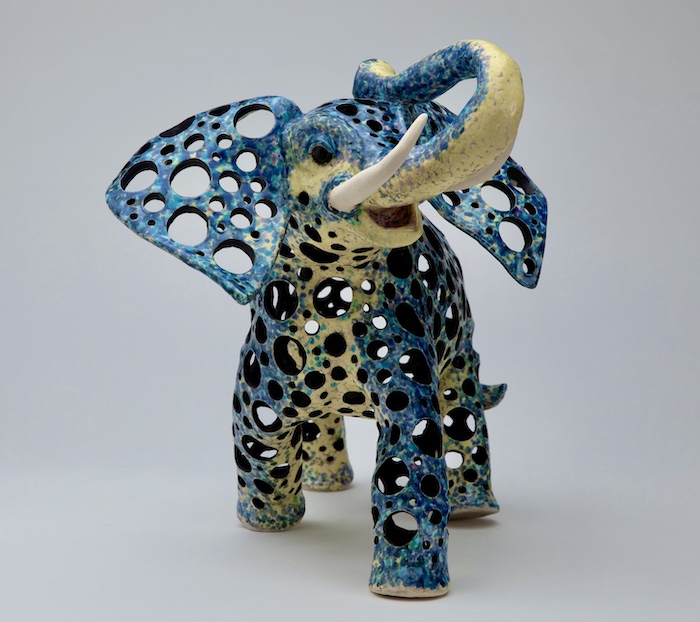
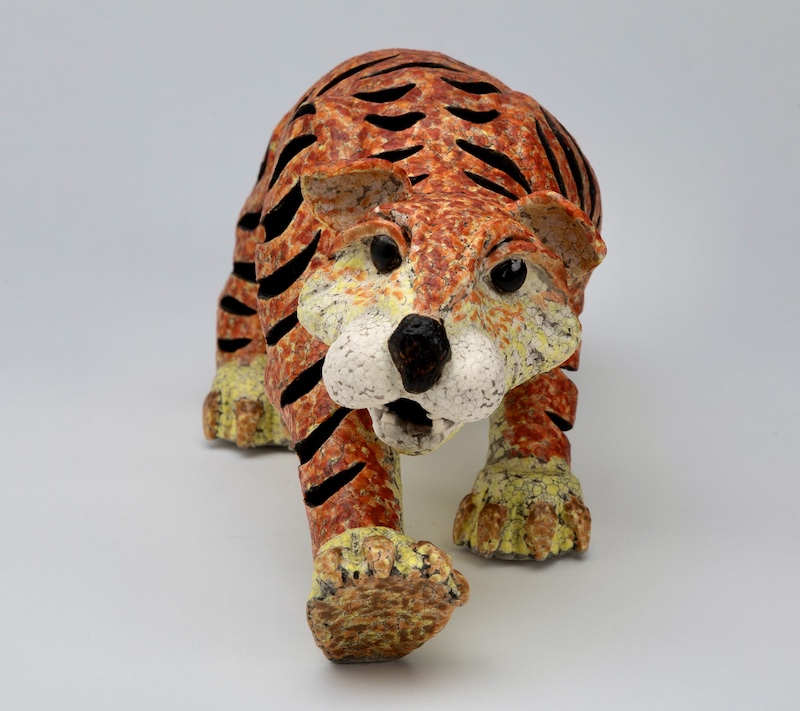
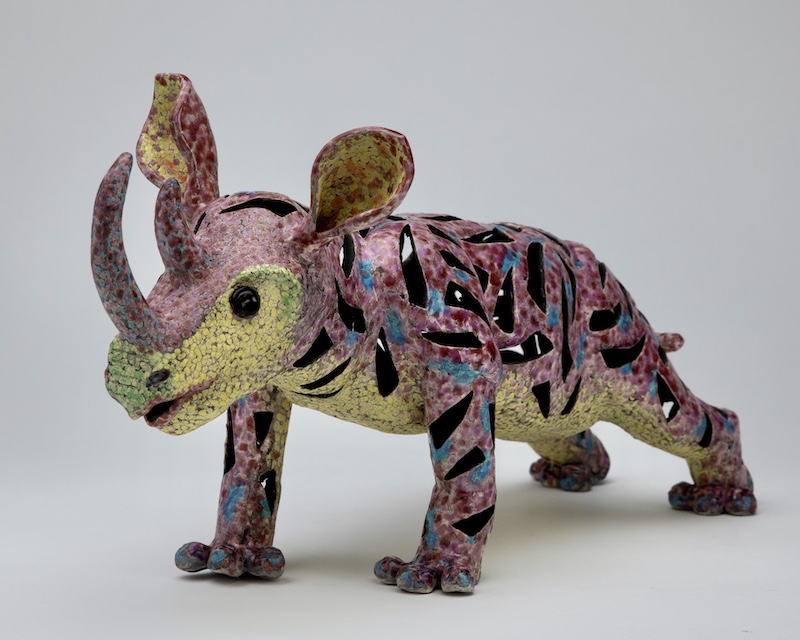
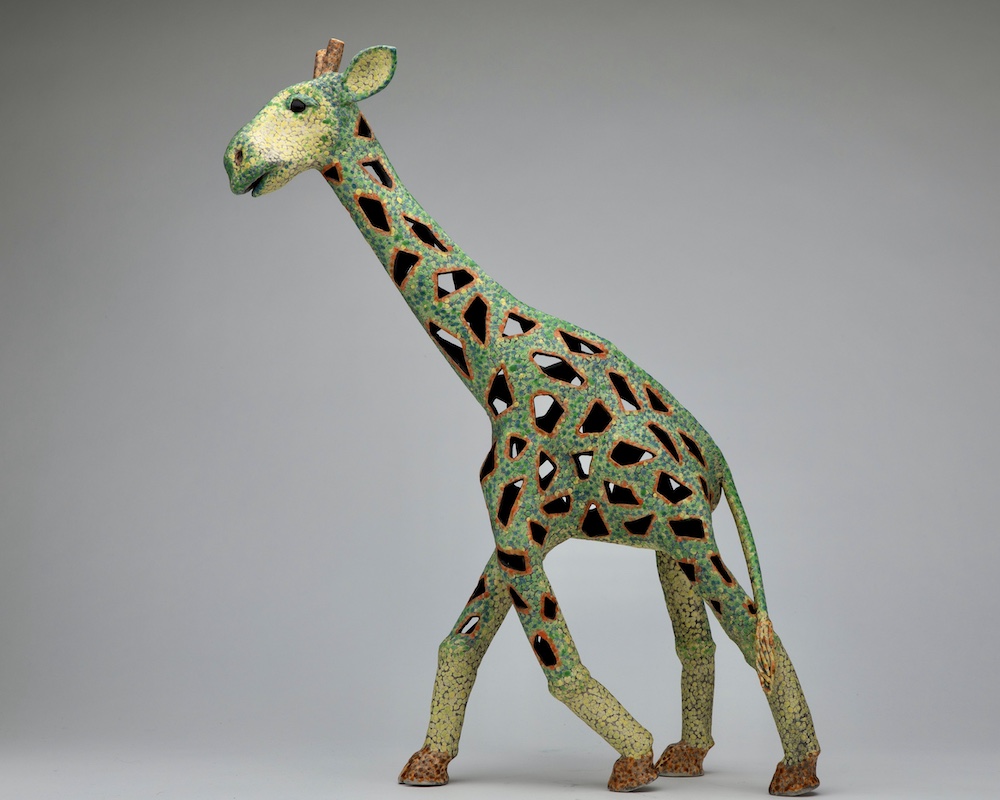
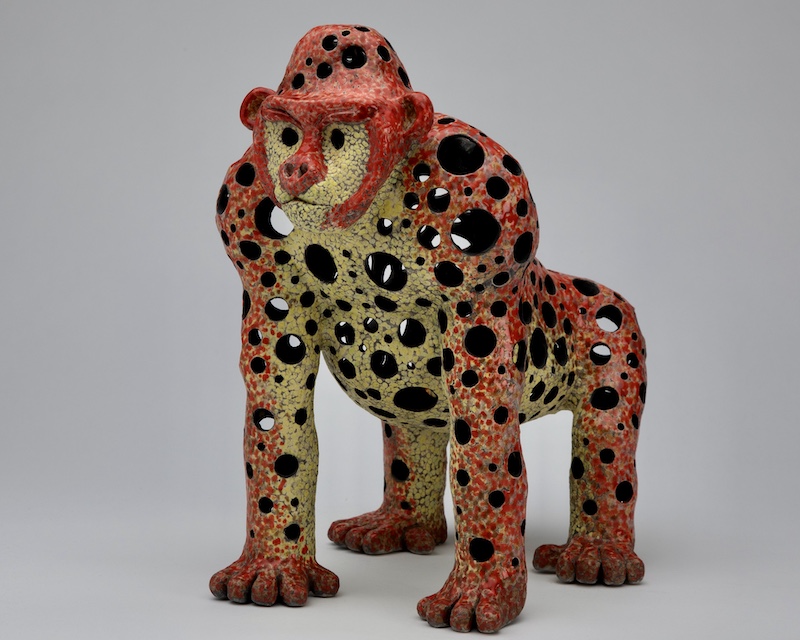
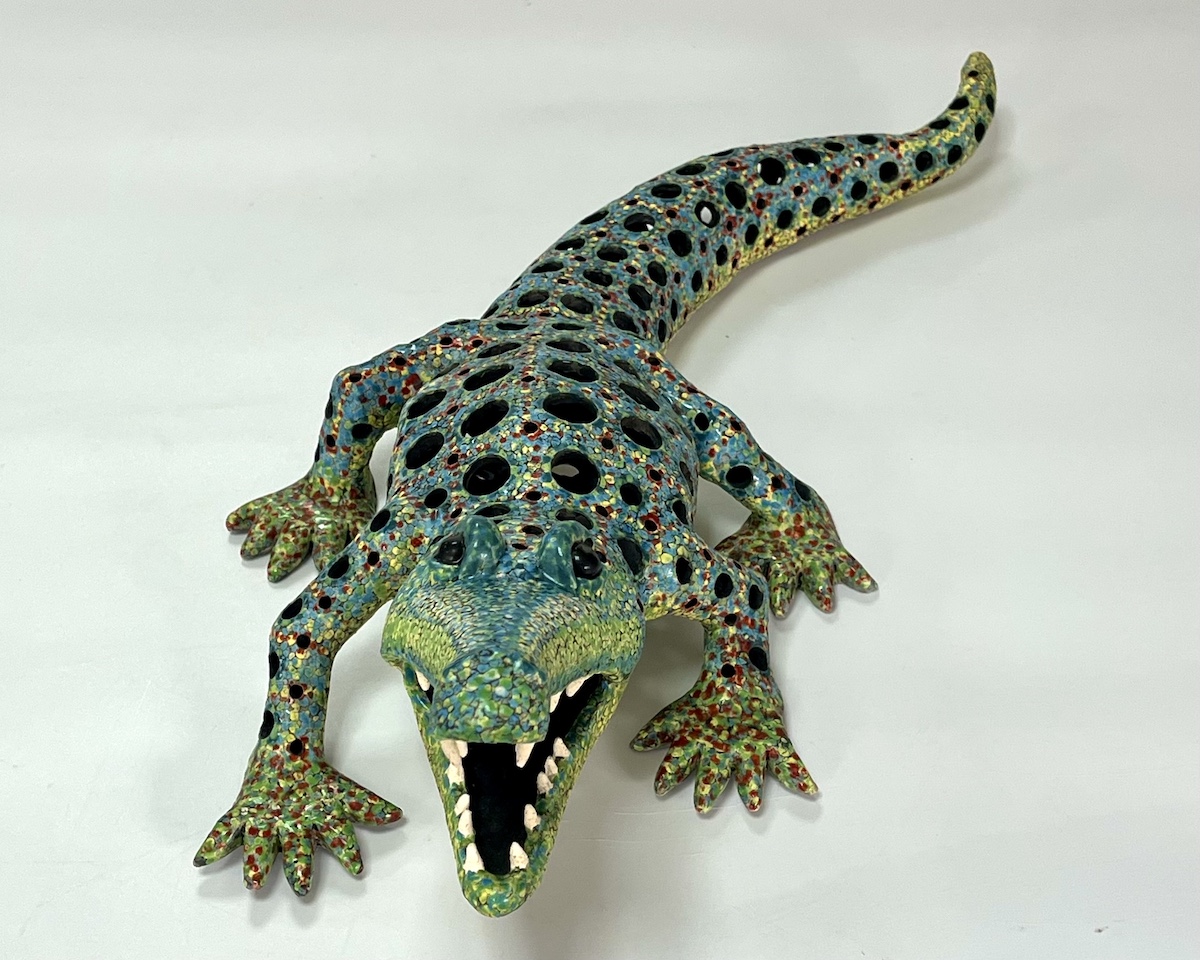
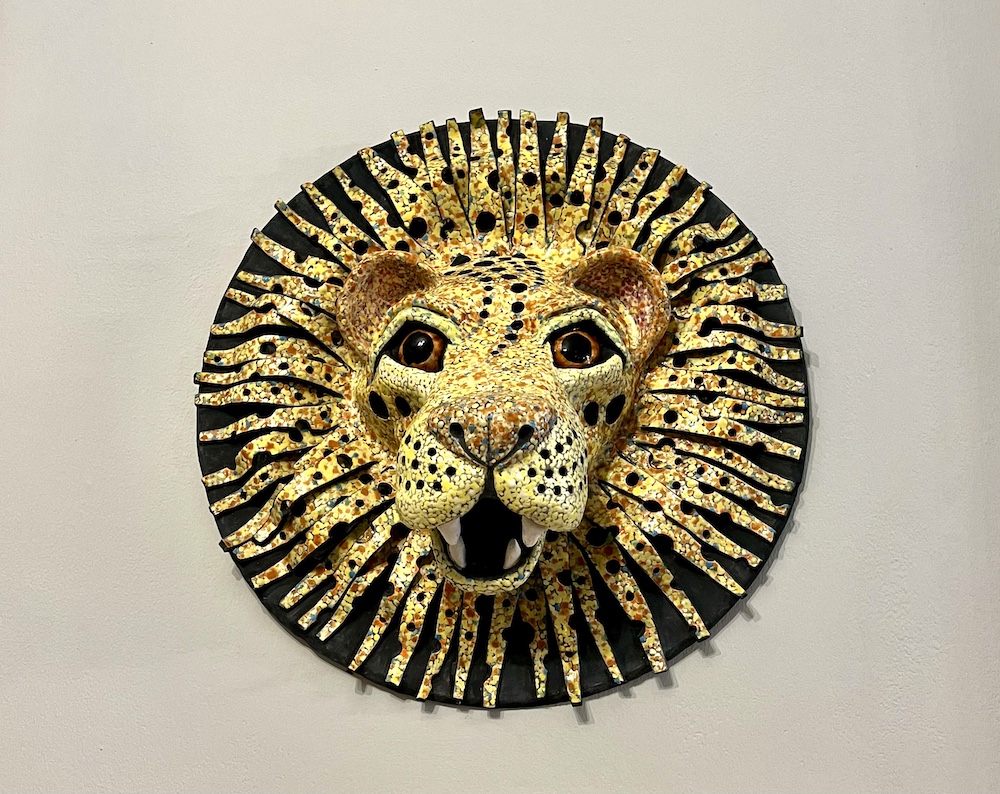
Disappearance is a series of colourful, joyous animal sculptures. Their hollow fragility symbolises the marginalised creatures they represent. Each celebrates a species that is categorised as endangered or vulnerable by the World Wildlife Fund.
I created this collection for my 2026 BA graduation show at Morley College, London. All are made from earthenware paper clay with glazes and underglazes.
TRUNKY the forest elephant (H28 x W22 x L39 cm) – much smaller than bush elephants, they live in dense forest across central and western Africa. Population has decreased by more than 80% over the past 3 generations due to habitat loss and poaching. The African forest elephant was declared critically endangered in 2021.STRIPES the Bengal tiger (H15 x W13 x L39 cm) – Despite being hunted to near extinction last century, there are now over 2,600 Bengal tigers living in the wild, mainly in India. Numbers are slowly recovering despite loss of habitat and poaching for skins and traditional Chinese medicine.TULIP the black rhino (H22 x W15 x L42 cm) – native to eastern and southern Africa, this three toed ungulate has a hooked lip designed for browsing foliage. Between 1970 and 1992, the number of black rhinos fell by 96% mainly due to poaching and rising demand for rhino horn in China and the Middle East. LOFTY the Rothschild’s giraffe (H48 x W13 x L28 cm) – distinguished by their bold pattern and lack of markings on their lower legs. There were around 1,400 mature individuals in the wild in 2018. Conservation is focused in Kenya and Uganda. GUS the mountain gorilla (H28 x W18 x L25 cm) – a strong, peaceful ape which inhabits Rwanda & DRC’s volcanic slopes. The mountain gorilla has been pushed to the brink of extinction due to habitat loss, deforestation, poaching, civil war, and disease. SNAPPER the Orinoco crocodile (H13 x W22 x L50 cm) – native to the Orinoco River basin in Colombia and Venezuela. It is one of the largest crocodile species, reaching up to 7m, and is the most endangered The estimated global population is less than 250 adults.RORY the Barbary lion (H33 x W33 x D11 cm) – this North African lion lived in the mountains and deserts from Morocco to Egypt. It had very heavily muscled forequarters with an immense mane. It was hunted to extinction in the 20th century.